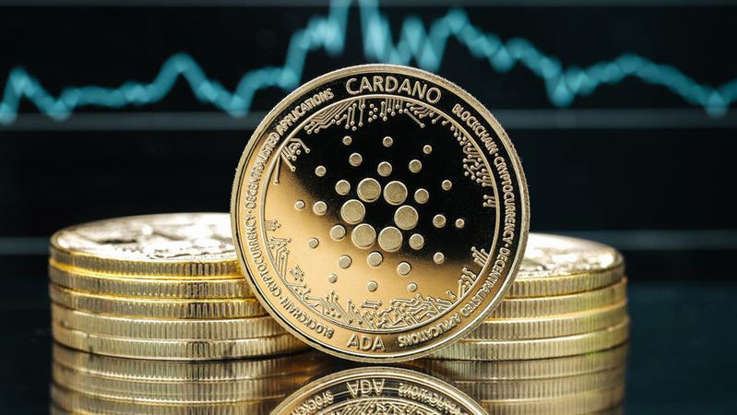
What is Cardano?
Cardano (ticker symbol: ADA) is a blockchain app and cryptocurrency that was designed to be more secure, scalable, and sustainable than earlier blockchains like Bitcoin and Ethereum. It’s often described as a third-generation blockchain because it aims to solve the limitations of the first two generations:
-
Bitcoin (1st gen): Introduced digital money and decentralization but had limited functionality.
-
Ethereum (2nd gen): Brought smart contracts and decentralized applications (dApps) but struggled with scalability and high fees.
-
Cardano (3rd gen): Uses advanced research, peer-reviewed technology, and a proof-of-stake system to improve scalability, security, and sustainability.
Key Features of Cardano
-
Proof of Stake (Ouroboros):
Unlike Bitcoin’s energy-intensive proof of work, Cardano uses Ouroboros, a consensus mechanism that allows users to stake ADA coins and help secure the network while earning rewards. -
Layered Architecture:
Cardano separates its blockchain into two layers:-
Settlement Layer (CSL): Handles ADA transactions.
-
Computation Layer (CCL): Runs smart contracts and decentralized apps.
-
-
Research-Driven Development:
Cardano is unique in that its design is based on academic research and peer-reviewed scientific papers, making it one of the most rigorously developed blockchain projects. -
Smart Contracts and dApps:
Similar to Ethereum, developers can build decentralized applications, DeFi (Decentralized Finance) apps, and NFTs on Cardano. -
Focus on Sustainability:
Cardano aims to create long-term blockchain solutions for real-world problems such as supply chain tracking, digital identity, and financial inclusion especially in developing countries.
ADA – The Native Token
-
ADA is the cryptocurrency used on the Cardano network.
-
It can be used for:
-
Transaction fees
-
Staking (to help run the network and earn rewards)
-
Voting on governance proposals
-
Buying/selling goods or services where accepted
-
Real-World Use Cases
-
Finance: Cardano provides affordable financial tools for unbanked populations.
-
Identity: Projects like Atala PRISM use Cardano for digital IDs, particularly in Africa.
-
Supply Chain: Companies can use it to track goods securely and transparently.
-
Decentralized Applications: Developers can build DeFi protocols, NFT marketplaces, and other apps.
In short: Cardano is a blockchain app designed to be a scalable, eco-friendly, and research-driven alternative to Ethereum, with ADA as its cryptocurrency.
Cardano Price Prediction & Detailed Guide
Below is an approximately 1,500-word comprehensive breakdown covering current analysis, medium- to long-term forecasts, technical and fundamental factors, and a strategic investment roadmap Cardano Price Prediction.
1. Market Snapshot & Recent Context
-
ADA is trading around $0.82–$0.83, supported by on-chain stability and bullish sentiment indicators.
-
The broader crypto market is consolidating (total market cap near $4 trillion), with Bitcoin stabilizing above $110K, often a precursor to altcoin rallies.
-
Support levels: $0.72 (200-day SMA) and $0.62; resistance: $0.83–$0.85 (50-day SMA and horizontal barrier).
-
Price dynamics suggest that a break above $0.85 could target $1.00–$1.20, while a failure may see a dip toward support zones.
2. Short-Term Predictions (Next Weeks to 3 Months)
-
CryptoTicker forecasts a breakout toward $1.00, potentially rising to $1.20 if altcoin strength prevails.
-
Blockchain.news sees potential for reaching $0.96 within two weeks, with support around $0.82 and room for upside via neutral RSI.
-
The Currency Analytics adds that ADA may climb to $1.32 if key resistances are cleared.
Consensus: Moderate bullish outlook, with short-term targets ranging between $0.95–$1.30 if momentum builds.
3. Mid-Term Forecasts (3–12 Months)
-
Changelly projects for 2025:
-
Min: $0.766
-
Max: $0.913
-
Avg: ~$1.06 (September average).
-
-
Benzinga sees:
-
Low: $0.735
-
Average: $0.945
-
Max: $1.376 for 2025.
-
-
Cryptoninjas offers a bullish outlook:
-
August–December 2025: $0.85–$1.05, rising to $0.95–$1.15 in September, $1.10–$1.30 in October, and $1.25–$1.50 in November.
-
-
Flitpay projects:
-
Min: $0.71
-
Max: $1.50
-
Avg: $0.90 for 2025.
-
-
CoinCodex estimates for 2025:
-
Range: $0.8245–$1.3417, a potential ~62% upside if highs are reached.
-
Overall mid-term projection: ADA could trade between $0.85 and $1.40, with an average expectation near $0.9–$1.1.
4. Long-Term Outlook (2026–2030 and Beyond)
-
CoinCodex (2026):
-
Forecasted range: $0.8766–$1.4853
-
Average: ~$1.145.
-
-
Changelly / Coinpedia (2030):
-
Bullish: $9.12–$10.32 (if market cap expands significantly)
-
More conservative: $5.50–$6.58.
-
-
Tokenmetrics:
-
With optimistic market capitalization growth, ADA could reach ~$3.38 by 2030; under less bullish conditions, around $1.69.
-
-
Flitpay long range:
-
2030: $9.56–$12.72 (average ~$10.37)
-
2040: $13.5–$25.5 (average ~$18.9)
-
-
Bravenewcoin (Wyckoff model):
-
Possible breakout to $1.50–$2.00, if trendline and cycle momentum align.
-
Long-term summary: Realistic targets:
-
2026: ~$1.10–$1.50
-
2030: $3–$10 possible under bullish expansions, but more conservative estimates land around $5–$6 or even $3.38. Extreme projections ($9–$12) exist but rely on exceptional market growth.
5. Key Drivers & Risk Factors
Fundamentals & Development
-
Cardano’s ecosystem continues to grow: Hydra scaling, Midnight privacy layer, decentralized identity, Plutus smart contract ecosystem, and DeFi projects like Indigo.
-
Adoption in Africa, sustainable identity and financial infrastructure could boost demand.
Institutional Activity
-
ETF interest (e.g., Grayscale’s GADA filing) signals growing institutional consideration.
-
Whale accumulation is noted as a supportive force.
Technical Momentum
-
Consolidation ranges, RSI neutrality, and potential wedge formations support breakout scenarios if Bitcoin and broader markets strengthen.
Risks
-
Macroeconomic volatility, regulatory uncertainty, and competition from other chains may dampen growth.
-
Most bullish long-term projections presume exceptional crypto adoption and multiple bull cycles very high uncertainty.
6. Strategic Guide & Roadmap
Investor Profile: Long-Term Holder
-
Entry zones: $0.80–$0.85.
-
Targets:
-
Short-term: $1.00–$1.30
-
Mid-term (12 months): $1.10–$1.50
-
Long-term (2030): Conservative $3–$6; Bullish $6–$10+.
-
-
Risk tolerance: Medium to high; set stop-loss near $0.72 to mitigate downside if market weakens.
Swing Trader
-
Capitalize on breakouts above resistance:
-
Watch $0.85–$0.96 zones
-
Momentum entries aim for $1.20–$1.50
-
Tight alarms around support (~$0.72–$0.75).
-
Diversified Crypto Approach
-
ADA can be part of a larger altcoin portfolio, balanced with higher-beta plays (e.g., new GameFi tokens like Rollblock or Layer Brett), which may offer higher upside but with elevated risk.
Monitoring Checklist
-
Technical: Consolidation breakout, RSI, SMA levels.
-
On-chain: Whale accumulation, network activity.
-
Macro: Bitcoin stability, ETF news, regulatory moves.
-
Fundamental: Major Cardano ecosystem updates (Hydra, Midnight, DeFi expansion).
Summary Table Cardano Price Prediction
| Timeframe | Price Range (USD) | Commentary |
|---|---|---|
| Current | ~$0.82–$0.83 | Consolidation above key support |
| Short Term (weeks) | $0.95–$1.30 | Breakout possible if momentum builds |
| Mid Term (to end 2025) | $0.85–$1.50 | Forecasts span conservative to bullish |
| 2026 | $1.10–$1.50 | Growth tied to ecosystem maturity |
| 2030 | $3–$6 (conservative) to $6–$10+ (bullish) | Dependent on crypto market expansion |
| Beyond 2030 | Up to $10–$12+ (very bullish scenarios) | High uncertainty |
How Cardano Works
Cardano is built to be secure, scalable, and sustainable. It works through several key components:
1. Proof-of-Stake Consensus (Ouroboros)
-
Instead of miners (like in Bitcoin), Cardano uses validators who are chosen to create and verify blocks.
-
Validators are selected based on the amount of ADA they “stake” (lock up as collateral).
-
The more ADA staked, the higher the chance of being chosen to validate transactions.
-
Validators earn rewards (in ADA) for securing the network.
This system is energy-efficient compared to Bitcoin’s proof-of-work.
2. Two-Layer Architecture
Cardano separates its blockchain into two main layers:
-
Cardano Settlement Layer (CSL):
-
Handles ADA transactions (sending and receiving coins).
-
Keeps track of balances, like Bitcoin.
-
-
Cardano Computation Layer (CCL):
-
Runs smart contracts and decentralized applications (dApps).
-
Developers use this layer to build DeFi apps, NFT platforms, games, etc.
-
This split makes the network more flexible and efficient than single-layer blockchains.
3. Smart Contracts & Decentralized Apps
-
Cardano supports Plutus, its smart contract programming language.
-
Developers can write complex applications (like DeFi lending apps, NFT marketplaces, supply chain tools).
-
These apps run in a decentralized way, without needing banks or third parties.
4. Governance and Upgrades
-
Cardano is designed to be self-governing.
-
ADA holders can vote on proposals for upgrades, fees, and new features.
-
This means the community has direct influence over Cardano’s future.
5. Interoperability & Real-World Use
-
Cardano focuses on real-world problems:
-
Digital identity (for education, healthcare, government IDs)
-
Supply chain tracking (for food, luxury goods, and medicine)
-
Financial inclusion (especially in Africa, where millions are unbanked).
-
6. Scalability (Hydra)
-
Cardano is developing Hydra, a layer-2 solution that allows the network to handle millions of transactions per second by processing them off-chain and then confirming on-chain.
Cardano works by combining proof-of-stake consensus, a two-layer blockchain, smart contracts, and community governance. It’s designed to be eco-friendly, scalable, and useful for real-world applications like finance, identity, and supply chains.
Frequently Asked Questions (FAQs) about Cardano Price
Here’s a FAQs section about Cardano Price (ADA):
1. What is Cardano (ADA)?
Cardano is a third-generation blockchain platform that supports smart contracts, decentralized applications (dApps), and token transactions. Its native cryptocurrency is ADA.
2. Who created Cardano?
Cardano was founded in 2017 by Charles Hoskinson, one of the co-founders of Ethereum. The project is developed by IOHK (Input Output Hong Kong), with support from the Cardano Foundation and Emurgo.
3. What makes Cardano different from Bitcoin and Ethereum?
-
Bitcoin: Digital money, but limited features.
-
Ethereum: Smart contracts and dApps but struggles with scalability.
-
Cardano: Uses a proof-of-stake system (Ouroboros), peer-reviewed academic research, and layered architecture for better scalability, sustainability, and security.
4. What is ADA used for?
-
Paying transaction fees
-
Staking to earn rewards
-
Voting on governance proposals
-
Trading and investment
5. Is Cardano environmentally friendly?
Yes. Cardano uses proof of stake (PoS) instead of proof of work (PoW). This reduces energy consumption by over 99% compared to Bitcoin mining.
6. Can Cardano run smart contracts?
Yes. Since the Alonzo upgrade (2021), Cardano supports smart contracts, allowing developers to build decentralized applications (DeFi, NFTs, DAOs, etc.).
7. How many ADA coins exist?
The maximum supply is 45 billion ADA, with around 35 billion ADA already in circulation.
8. Where can I buy Cardano (ADA)?
You can buy ADA on major cryptocurrency exchanges like Binance, Coinbase, Kraken, and KuCoin.
9. How do I store ADA?
ADA can be stored in:
-
Software wallets: Yoroi, Daedalus (official wallets)
-
Hardware wallets: Ledger, Trezor for maximum security.
10. What is Cardano used for in the real world?
-
Digital identity: Used in education and government ID projects in Africa.
-
Supply chain: Tracking products
-
Finance: Decentralized finance (DeFi) apps and lending apps.
11. Is Cardano a good investment?
Cardano is seen as a long-term project due to its strong academic foundation and focus on real-world use cases. However, like all cryptocurrencies, it is volatile and carries risks.
12. Can Cardano reach $10 or more?
Analysts are divided. Some bullish long-term predictions suggest ADA could reach $5–$10+ if adoption grows and the crypto market expands significantly, though this is speculative.